

Fortura•Industries
Cyber Security for Critical Infrastructure & OT
In critical infrastructure, cyber risk isn’t about data first. It’s about whether the lights stay on, the water stays clean, and trains keep moving.
Fortura•Industries
In critical infrastructure, cyber risk isn’t about data first. It’s about whether the lights stay on, the water stays clean, and trains keep moving.
Energy, water, transport, resources, communications, ports, health, food and other essential services are now deeply digital. Operational technology (OT) and industrial control systems (ICS) that used to be isolated are increasingly connected—to IT networks, cloud platforms and third-party vendors.
Adversaries have noticed.
The 2024 IBM Cost of a Data Breach analysis for the industrial sector reported an average breach cost of USD 5.56 million, an 18% increase on 2023—one of the steepest jumps across all sectors. (IBM)
In Australia, the latest Annual Cyber Threat Report 2024–25 from the Australian Signals Directorate shows:
USD 5.56M
Average industrial breach cost (IBM 2024)
18%
Year on-year increase in industrial breach cost
1,200+
Cyber incidents responded to (ASD 2024–25)
219%
Increase in average cost for large businesses
Industrial-focused research from Dragos in early 2025 shows OT/ICS cyber threats continuing to escalate, driven by ransomware, exploitation of remote access, and supply-chain gaps—with ransomware activity against industrial organisations remaining consistently high and ICS becoming one of the most impacted sectors. (Dragos)
All of this is happening as AI-assisted attacks and “grey zone” operations blur the line between criminals, hacktivists and state-aligned actors, with critical infrastructure a prime target for disruption and leverage. (Daily Telegraph)
Fortura exists so that “assume compromise” doesn’t turn into “assume outage”.
“If an outage in your environment would show up on the news, in Parliament, or in a national incident report, this is your threat model.”
OT and ICS networks increasingly connected to IT for monitoring, analytics and remote operations
Cloud-hosted historians, asset management, work management and engineering systems
Remote access for OEMs, vendors and field crews
Tougher obligations under Australia’s Security of Critical Infrastructure Act 2018 (SOCI) and associated Critical Infrastructure Risk Management Program (CIRMP) rules, including 2025 amendments that explicitly bring “business critical data” and secondary systems into scope (CISA Website)
Growing focus on resilience and “minimum operating levels” for essential services
Greater scrutiny from media, customers and community whenever there is a disruption
ASD’s 2024–25 report highlights an 83% increase in proactive notifications to entities about potentially malicious cyber activity, with nearly half of confirmed incidents involving malware or ransomware. (Cyber.gov.au)
Dragos’s 2025 OT/ICS reporting describes a convergence of state-sponsored threats, criminal groups and hacktivist fronts, with industrial organisations squarely in the crosshairs. (IT Brief Australia)
“For critical infrastructure, the mandate is brutal in its simplicity: keep services safe, keep them running, and survive contact with modern attackers.”
Dragos’s 2025 ransomware analyses show industrial organisations consistently among the most impacted, with ICS-related incidents rising and sectors like manufacturing, energy, transportation and equipment engineering repeatedly targeted. (Dragos)
At the same time, we’re seeing AI-assisted campaigns where generative AI is used to:
The line between “IT incident” and “operational disruption” gets crossed much faster than most organisations expect.
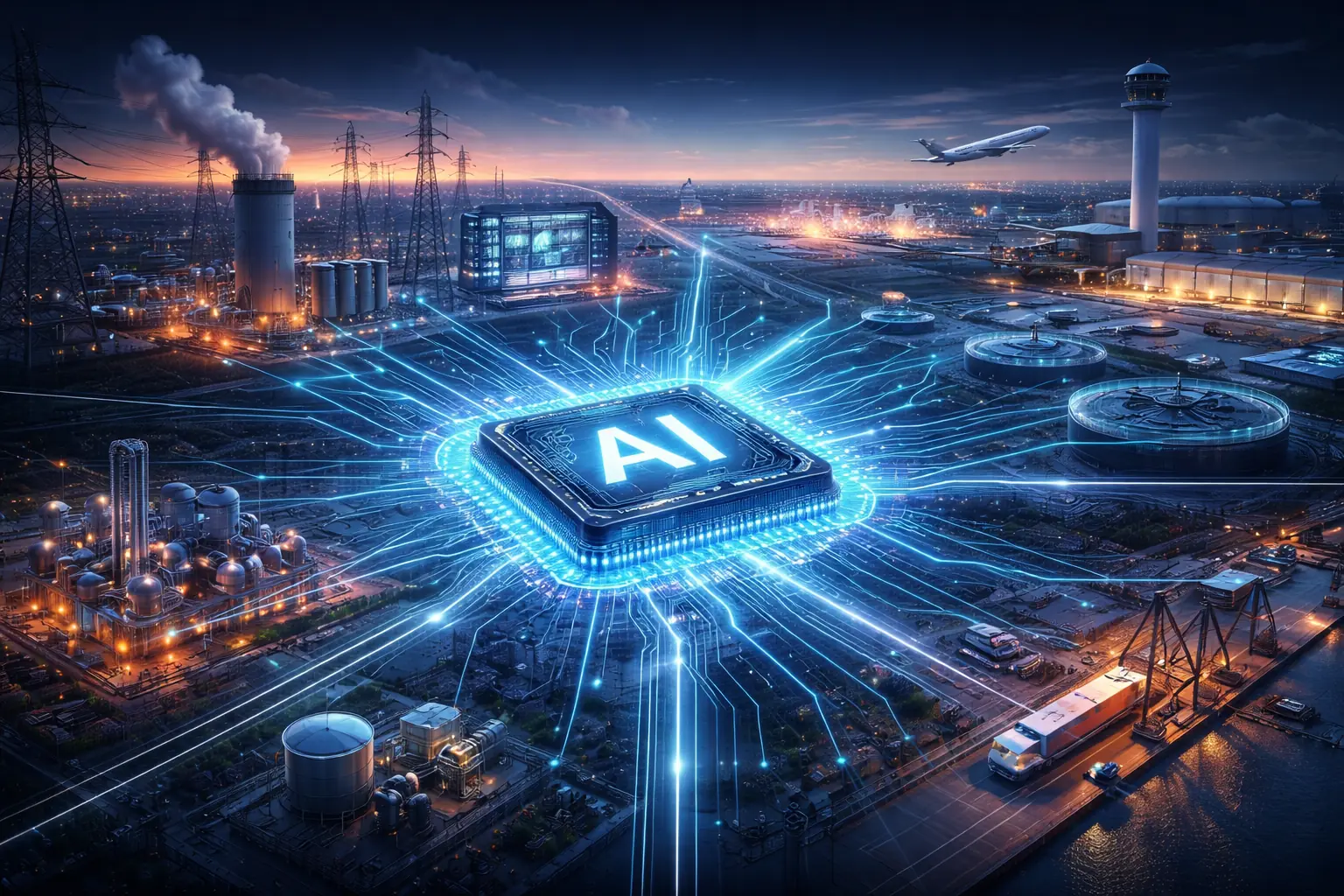
“If your AI initiatives sit outside your risk and OT safety programs, you don’t have an innovation strategy—you have an uncontrolled experiment on essential services.”
Fortura’s stance is that AI in OT must be treated as both an opportunity and a hazard—with threat models, controls and governance to match.
Cyber and Infrastructure Security Centre guidance under the SOCI Act
Critical Infrastructure Risk Management Program (CIRMP) rules, including 2025 amendments that expand “material risks” to cover business critical data and data storage systems (CISA Website)
Sector-specific regulation (energy, water, transport, health, communications) and state-based obligations
ACSC’s Essential Eight and wider guidance for critical infrastructure entities
IEC 62443 for industrial automation and control systems
NIST SP 800-82 for ICS security
Industry-specific standards (e.g. NERC CIP in power, where relevant for global operators)
NIST Cybersecurity Framework (NIST CSF)
ISO/IEC 27001 and related controls standards
Safety and reliability frameworks already in use for process safety and asset management
Fortura doesn’t treat these as a checklist problem. We treat them as your minimum licence to operate, then focus on the practical question: what changes in your plant, network and supplier ecosystem tomorrow?
Power interruptions, water issues, transport delays, port congestion, health service diversion
Increased operational risk if safety systems, HMI, alarms or procedures are impacted
Downstream businesses and communities affected by outages, especially in regional or remote areas
Investigations, enforceable undertakings, potential penalties under SOCI and sector regulation
Incidents exploited in information operations or used to signal capability and intent
The global data breach average of USD 4.44 million in 2025 is almost academic compared to the real-world cost of a multi-day outage of electricity, water or transport services, but it does highlight how quickly incident costs have grown. (Baker Donelson)
Overlaying all this is the “harvest now, decrypt later” risk highlighted by national security agencies: adversaries collecting encrypted OT and infrastructure-related data today, intending to decrypt it with future quantum capabilities—particularly sensitive design, configuration and communications data that might underpin critical systems for decades. (Daily Telegraph)
For boards, executives and asset owners, the question becomes: “What is the real cost—in money, safety and sovereignty—if we only find out our assumptions were wrong during a major incident?”
SOCI and CIRMP obligations will continue to evolve, with more sectors and more “downstream” entities brought into scope, and more emphasis on demonstrable resilience rather than just compliance.
Shared platforms, cross-border ownership and complex supply chains will force operators to think beyond their own fence line.
State-aligned actors will continue to use AI and autonomous agents to probe, map and pressure critical infrastructure without crossing into open conflict.
Long-lived OT systems and critical data flows will need crypto-agility and migration plans as standards mature.
State-aligned actors will continue to use AI and autonomous agents to probe, map and pressure critical infrastructure without crossing into open conflict.
SOCI and CIRMP obligations will continue to evolve, with more sectors and more “downstream” entities brought into scope, and more emphasis on demonstrable resilience rather than just compliance.
Long-lived OT systems and critical data flows will need crypto-agility and migration plans as standards mature.
Shared platforms, cross-border ownership and complex supply chains will force operators to think beyond their own fence line.
Fortura’s commitment in this space is simple:
“We’re not here to tell you to shut everything down. We’re here to help you keep the lights on, the water flowing and the nation moving—even when someone is actively trying to stop you.”
No Sales Scripts. We'll Talk Through Your Situation.
If you're shaping strategy, assessing risk, or preparing for what's next, we'll help you get clear on priorities and act with confidence. Tell us what you're working through - we'll respond quickly.

Get the latest news, research notes, practical guidance, and threat updates written for people making security decisions.
© 2026 Fortura. Operated by Fortura Labs Pty Ltd.
All rights reserved.